
How Professional AC Repair Permanently Fixes a Frozen Evaporator Coil Blowing Warm Air
The Root Cause of Warm Air and Ice
A frozen evaporator coil that blows warm air requires professional diagnostics to fix the underlying airflow and refrigerant issues permanently. When ice builds up on the indoor coil, it creates a physical barrier that prevents the system from absorbing heat from the indoor air. This buildup forces the system to circulate warm air through the vents while the equipment strains to operate. At Quality Degree Inc., we see this issue frequently during peak cooling seasons when systems operate under heavy thermal loads. Resolving this problem requires specialized tools to measure static pressure, evaluate refrigerant charges, and clear deeply rooted blockages. Property owners who notice ice formation need targeted technical intervention to restore proper cooling capacity to the air conditioning in Royersford, PA.
According to data from the U.S. Department of Energy, restricted airflow is a primary cause of system inefficiencies and component freeze-ups. When air cannot move across the evaporator coil, the temperature of the refrigerant drops below freezing, causing moisture in the air to turn to ice. A professional technician approaches this issue by examining the return ducts, the blower motor, and the filtration system. Resolving the airflow restriction stops the freezing cycle completely. This comprehensive evaluation is a standard part of any professional air conditioning repair process.
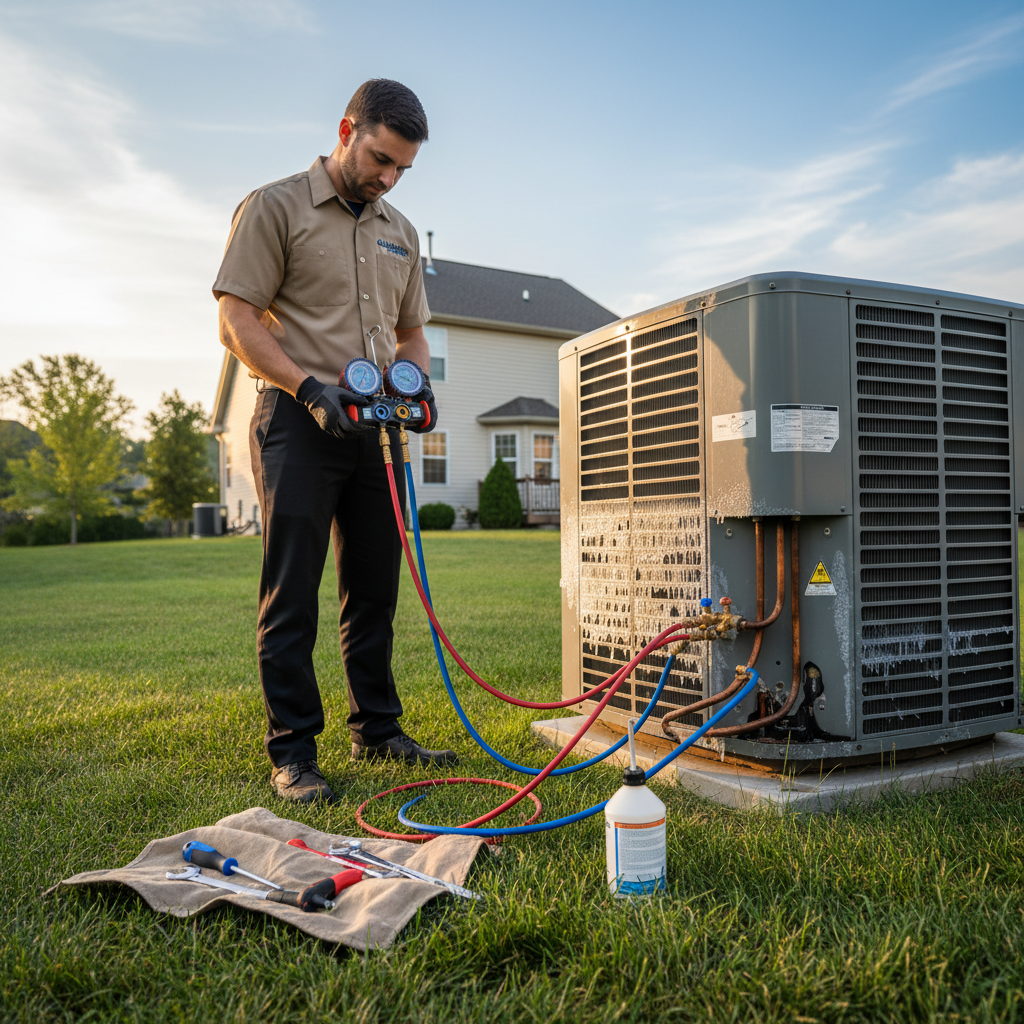
Inadequate refrigerant levels represent another common source of ice accumulation on the cooling coils. When a system leaks refrigerant, the pressure inside the evaporator coil drops significantly, leading to sub-freezing temperatures that freeze household moisture on contact. Technicians use digital manifolds to check the exact pressures and locate the source of the leak within the lines. Repairing the leak and recharging the system prevents the ice from returning. This precise mechanical calibration is performed during a standard air conditioning installation to avoid early component failure.
Accumulated debris on the coil surface acts as an insulating blanket that blocks heat transfer and causes condensation to freeze. Over multiple seasons, dust and pet dander bypass standard filtration systems and settle deep within the metal fins. Specialized chemical rinses and self-rinsing coil cleaners are required to safely dissolve this buildup without damaging the sensitive aluminum components. Maintaining clean coils is a fundamental aspect of routine air conditioning maintenance that keeps systems running efficiently.
A failing blower motor can also cause the cooling system to freeze over and blow warm air into the living space. If the fan cannot spin at the required revolutions per minute, the cold air remains trapped inside the cabinet. Technicians measure the electrical amperage of the motor to determine if the component requires replacement or rewiring. This diagnostic step is vital for the long-term health of modern HVAC air conditioning systems.
Defective expansion valves can restrict the flow of refrigerant, causing localized freezing that quickly spreads across the entire coil structure. The expansion valve regulates how much liquid refrigerant enters the evaporator coil based on the temperature of the air. If the valve sticks closed, the sudden drop in pressure creates immediate ice formation. A certified technician must replace the faulty valve to re-establish the proper thermodynamic cycle during an AC repair service.
Inadequate duct design or crushed ductwork can restrict the volume of air returning to the cooling unit, leading to rapid ice formation. When supply vents are blocked or closed off in multiple rooms, the static pressure inside the system rises significantly. Technicians utilize specialized manometers to test the pressure levels throughout the duct network. Correcting these distribution flaws is a key component of comprehensive AC maintenance.
Improperly sized equipment can lead to short cycling and uneven temperature distribution, which often manifests as frozen coils during periods of high humidity. When a cooling unit is too large for a property, it cools the space too quickly without removing sufficient moisture, leading to condensation that freezes on the coil. Addressing these structural sizing mismatches requires an expert assessment often associated with a new AC installation.
The Professional Diagnostic Process
When a technician arrives at a property, the initial step involves safely thawing the ice accumulation without causing water damage to the surrounding structure. Turning off the cooling function while leaving the fan running helps melt the ice gradually. Technicians monitor the condensate drain pan to ensure the melting water flows away from the property correctly.
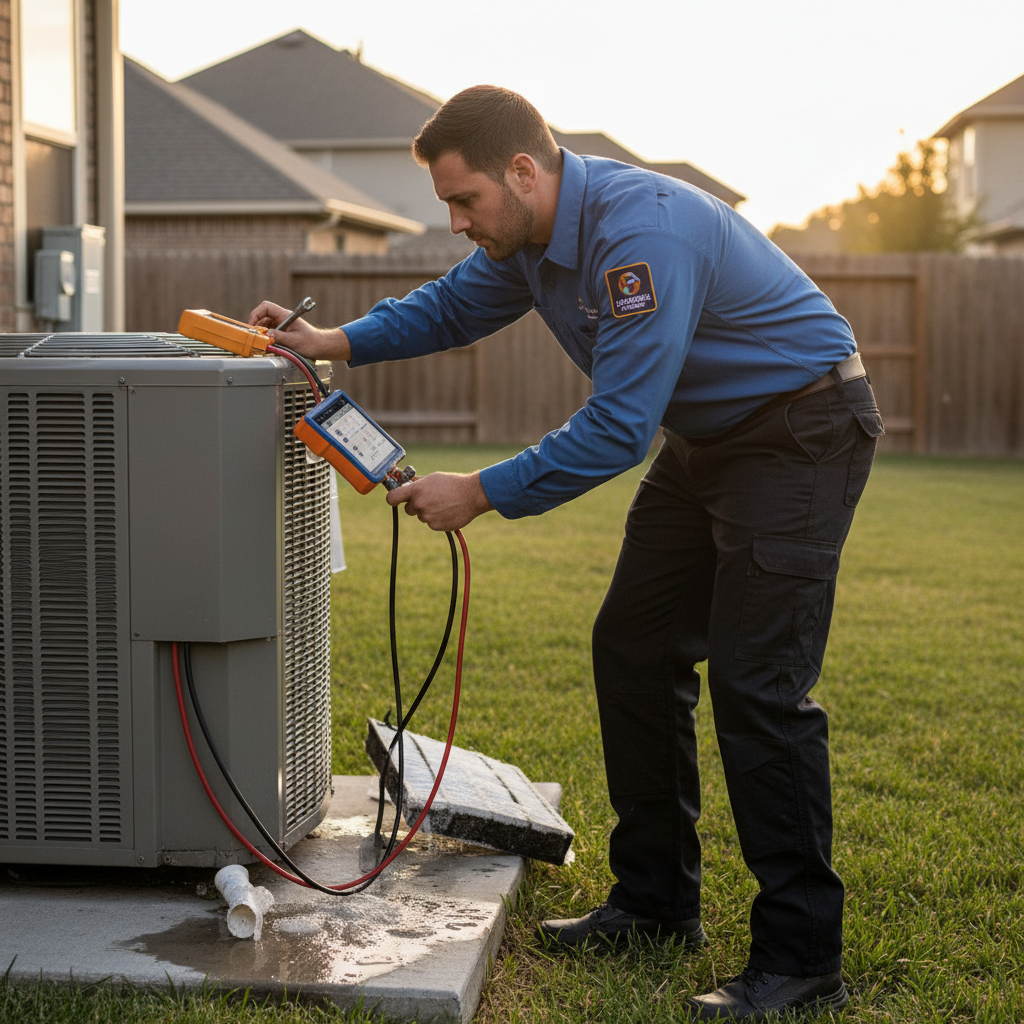
Once the ice clears, the technician connects specialized diagnostic computers to the outdoor condenser unit to read the live operational data. These tools measure subcooling and superheat temperatures to pinpoint exactly why the system is malfunctioning. This data allows the technician to make accurate adjustments rather than relying on guesswork.
The final phase of the repair involves testing the entire system under normal operating conditions to confirm the issue is resolved completely. The technician verifies that the air entering the return vents is significantly warmer than the air exiting the supply vents. This temperature differential confirms that the system is absorbing heat properly.
Frequently Asked Questions
What should a property owner do immediately if the cooling system freezes?
Turn off the cooling system at the thermostat immediately and switch the fan setting to the on position to start melting the ice. Do not attempt to scrape the ice off the coils manually, as this can puncture the refrigerant lines.
How long does it take for a professional to fix a frozen coil?
The entire process generally takes between two and five hours, depending on how much ice must melt before diagnostics can begin. Once the ice is gone, the actual repair work typically takes about an hour.
Can a dirty air filter cause the entire cooling unit to freeze up?
Yes, a heavily clogged filter blocks the necessary airflow across the evaporator coil, causing the temperature to drop below freezing quickly. Changing the filter regularly is the easiest way to prevent this specific issue.
Restoring Home Comfort Safely
Dealing with a frozen cooling system requires professional expertise to handle the complex electrical and chemical components safely. Our team brings extensive field experience to every service call, ensuring your system functions correctly throughout the hottest months of the year. Quality Degree Inc. provides exceptional support backed by great warranties and financing options to fit your specific budget. As a business with a consistent 5-star Google rating, we take pride in delivering dependable workmanship every single day. Our technicians are fully licensed, bonded, and insured, giving you complete confidence in the safety of your property. We provide free estimates for system upgrades.
Contact our team today to help you make informed decisions. Our team remains available 24 hours a day to handle emergency situations whenever they arise.
Contact Us for the Best in HVAC Installs and Replacement
For 24/7 HVAC installation and replacement in Royersford, PA, call Quality Degree. You can also schedule an appointment online right now by filling out the contact form.